
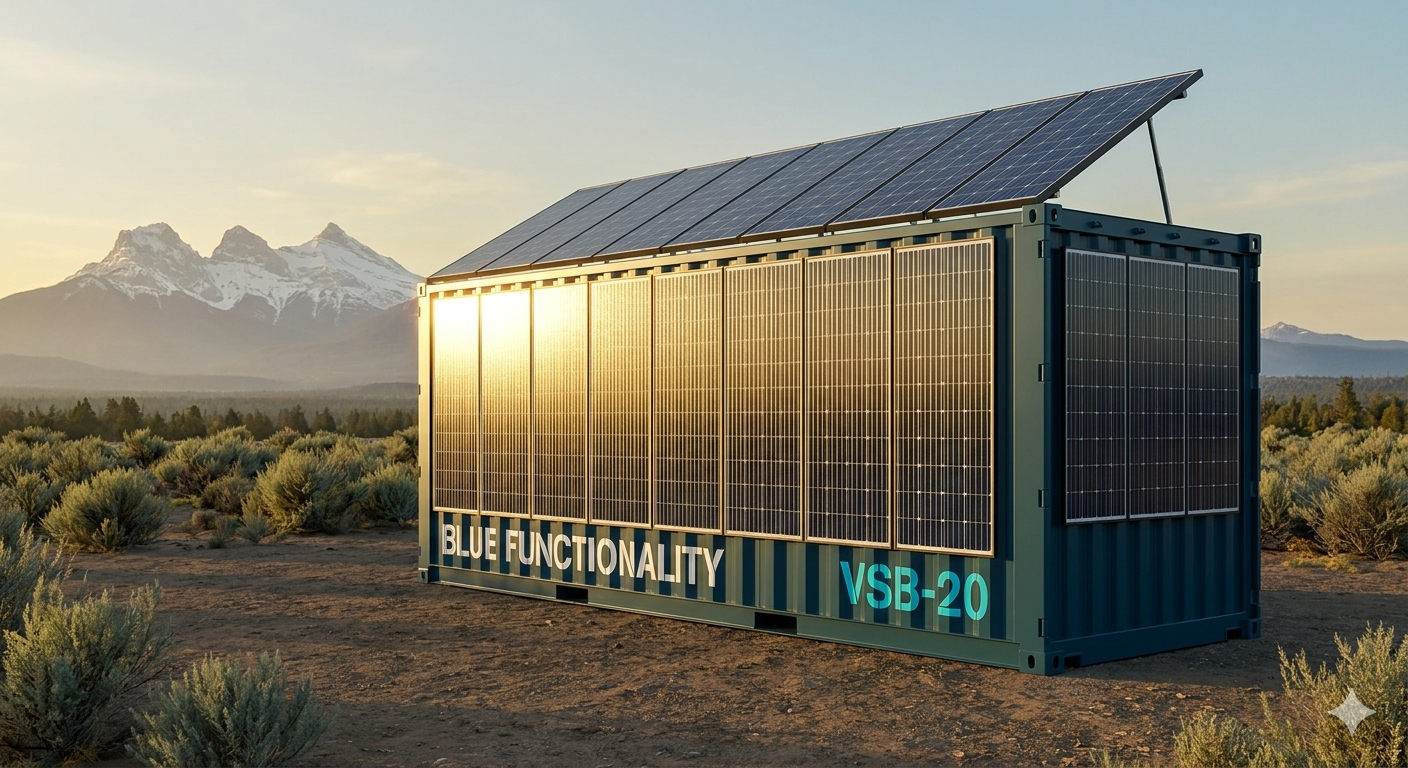
Blue Functionality brings vanadium solid-state battery (VSB) systems to North America: non-flammable, 20+ year-lived, and modular. One chemistry, integrated for Marinas, Yards, and Sites; charging stations, data centers, grid-scale storage, and emergency power.
We don't manufacture cells. We design, integrate, and deploy the systems built on them.
Blue Functionality brings marine, commercial, and industrial (C&I) behind-the-meter power solutions to North America. Vanadium solid-state batteries (VSB) are non-flammable, 20+ year-lived, and modular, built for data centers, grid-scale storage, and vessels and docks.
Think of VSB as a dynamic conveyor belt of power, not a static bucket of storage fighting its own discharge. Blue Functionality sizes VSB to the work a site actually has to do, buying the duty cycle instead of padding a pack for thermal margin. That is what makes the chemistry pay off across marine, commercial, and industrial deployments, from harbor craft and uncrewed maritime systems to data centers and grid-scale storage. VSB wins on physics and power, not on density and energy.
We handle application engineering, system integration (marinizing, containerizing, or rack-mounting VSB packs for the operating environment), go-to-market development, and the regulatory and certification pathways: fire codes, grid interconnection, and marine class approvals.
Vanadis Energy · MK Plus · RISE · Agellus Marine and LandVanadium solid-state introduces a new class of energy storage. It's ultra-safe, easy to install, and built for reliable, high-power performance: energy storage as infrastructure. Our contribution is platform integration across marine, microgrid, and industrial duty cycles.
Multi-hour firming where 4-hour lithium-ion runs out, sized to the load, not to a fixed window.
Solid electrolyte. Cannot ignite, vent, or run away thermally. Insurable at community and venue scale.
15,000+ cycles with limited capacity fade and no mandatory rest period, which supports long-tenor debt.
A single mineral: no lithium, cobalt, or nickel, and no exposure to those supply chains or price swings.
≈85% of cell material is recovered at end of life and returned to new cells. Circular by design.
10-15× faster than lithium, with no derating in a hot room and no cooling overhead built around the cell.
Think of a battery less like a bucket of stored energy and more like a conveyor belt of power, sized to the duty, not the spec sheet. The case is the duty: cyclic, high-power, fire-critical loads on a 20-year infrastructure horizon win on cycle-life (2-4 pack replacements instead of 6-15 over that span), a 60C recharge instead of hours, 100% depth-of-discharge, and non-flammable chemistry, whether that's on the pier, in the battery room, beside the crowd, or at sea aboard an uncrewed host.
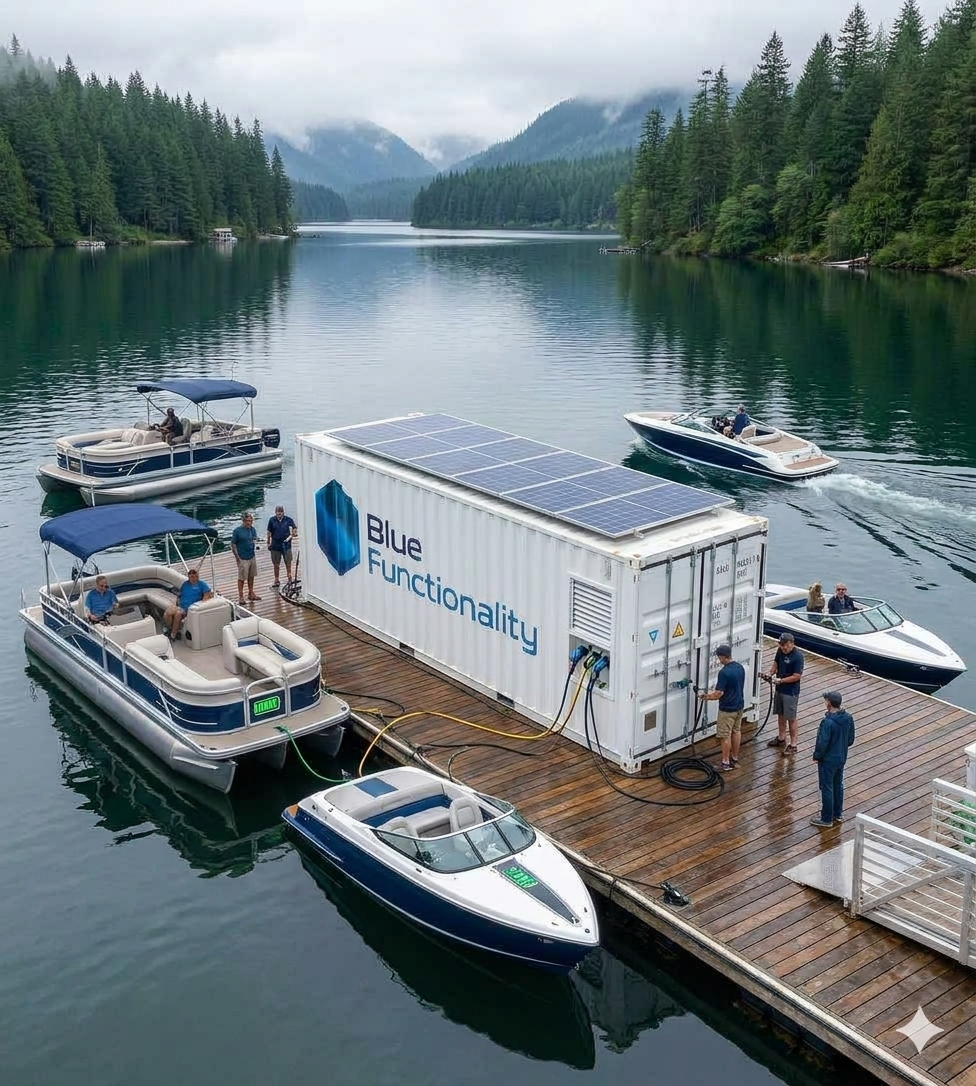
A non-flammable buffer is the last thing a dock or an uncrewed vessel wants to set on fire, and exactly what the marine energy transition has been missing.
A marinized VSB energy buffer aboard an autonomous surface vessel turns AUV recharge downtime into observing time. It replenishes a survey swarm on station, so it collects more data, over wider coverage, at lower cost per km², without returning to port.
One container charges 2-6 electric boats at full rate from the feeder you already have. It banks off-peak power, so the dock never needs a six-figure utility upgrade. Turns "we can't charge here" into "plug in and go."
A non-flammable buffer sized to duty-cycle demand, not lithium's derating curve: power-dense enough for maneuvering loads, safe enough for a berth or a passenger deck, and fast enough to top up between runs instead of parking for a charge.
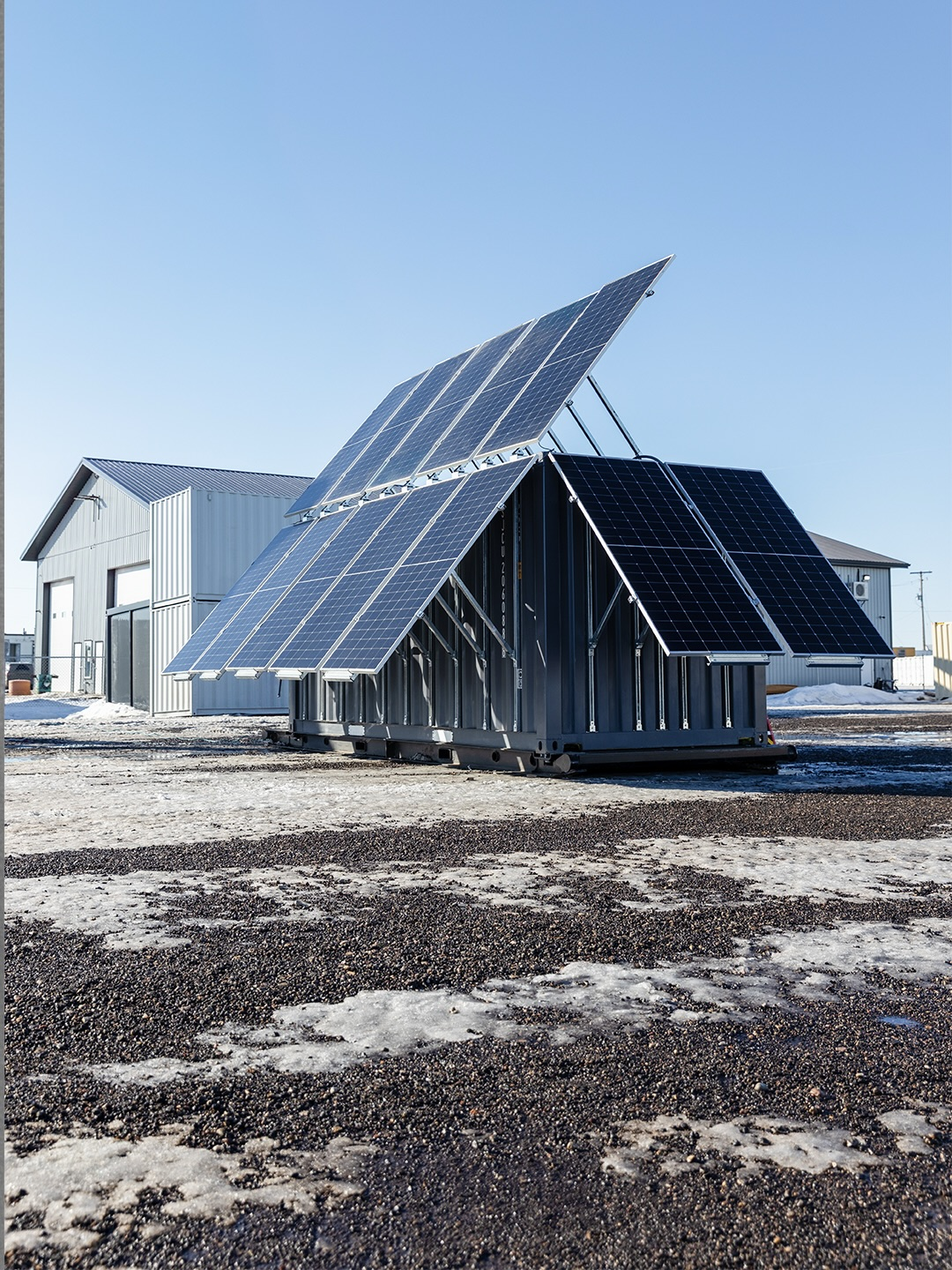
High-power ride-through and multi-hour firming, without the fire load, cooling overhead, or replacement cycle that lithium drags into a building.
Carries AI racks through the transfer to standby and is ready for the next event, with no derating in a hot room and no fire-suppression overhead. Drops onto the UPS footprint and one-line you already have, and ends the 8-10 year replacement cycle.
Deploys in under 30 minutes, runs silent and fuel-free, and lasts the outage. It's safe beside crowds and inside venues, where new diesel gensets are 70+ weeks out and can't be added before the event anyway.
Ranches, lodges, mining, construction, research, and defense microgrids: multi-hour storage with no genset hours, no heat signature, and no refueling crew. Peak-shave and arbitrage where the grid is thin or absent.
Vanadium is a single, recoverable mineral. At end of life, roughly 85% of the cell material is recovered and flows back into new cells: no rare earths, no cobalt, no nickel, no hazmat to dispose of. The electrolyte is largely re-usable, so the chemistry is circular rather than consumed.
Paired with a 20-year design life, that's three to four lithium replacement cycles avoided before the loop even closes: a materially lower lifecycle footprint, and the single-mineral, recyclable, long-life story that ESG procurement now rewards.
The technology is timely because the market moved to meet it: on safety, on demand, on supply, and on regulation.
Fire-code setbacks have tightened and insurance underwriting has hardened across regulated facilities. That prices lithium's fire risk into siting and coverage.
IMO, IMDG, DNV, and ABS rules are built around lithium's fire risk, and ABS has already qualified vanadium chemistry as inherently non-flammable, opening a faster classification path for VSB at sea.
GPU clusters swing power by hundreds of kW in an instant, creating urgent need for safe, zero-cooling ride-through the room can stand.
Uncrewed observation is growing fast, but recharge speed and lithium freight restrictions remain the hard constraints on coverage.
Single-mineral, ≈85%-recyclable, 20-year systems beat lithium's supply-chain and end-of-life footprint where buyers now score it.
Regional, secure, recyclable, and redevelopable. A single mineral, and a lighter footprint for it.
One platform, sized to the job, from a containerized drop-in unit to a rack that bridges an AI cluster. Here's how the chemistry stacks up.
| What matters on site | Lithium-ion (NMC / LiPo) | LFP (LiFePO₄) | VSB (Vanadium Solid-State) |
|---|---|---|---|
| Fire / thermal runaway | Propagating; needs suppression, vents, setbacks | Reduced but real: runaway above ~270 °C | None: non-flammable, no off-gas, no propagation |
| Cycle life (deep) | 500-2,000 | 3,000-6,000 | 15,000+ |
| Service life | 5-8 years | 10-12 years | 20+ years |
| Fast-charge | 0.5C-3C | 0.5C-3C (EV-class cells) | Up to 60C |
| Operating temperature | 0 to +45 °C (active cooling required) | −20 to +60 °C (still wants cooling) | −40 to +100 °C, no active cooling |
| Freight / DG class | UN 3480 / 3481, Class 9; ≤30% SoC on aircraft | UN 3480 / 3481, Class 9; same DG burden | Dead-safe at 0 V; UN number pending, no blanket DG exemption claimed. |
| Recyclability | ~50% recoverable | ~50% recoverable | ≈85% of cell material recovered |
Specifications indicative; final ratings confirmed per project. See "Circular by design" for what's behind the ≈85% recovery figure.
The chemistry is field-proven and the supply chain is real, shown in grid stabilization, fleet trials, and a selected international scale-up program.
Vanadium solid-state cell and platform developer. Blue Functionality integrates and deploys systems built on Vanadis chemistry in North America.
Manufactures VSB cells, with European delivery via EM Plus.
Five-year R&D agreement underpinning the chemistry; field-proven in grid stabilization in Sweden and Poland.
Energy-industry robotics and autonomy specialist for power and duty-cycle profiling, integration, and the certification engineering path.
Selected for the ScaleX program, with pilots underway and supported manufacturing planned.
Grid stabilization in Europe, fleet trials, and integration into a 4 kWh USV power system, with core packs at TRL 5-6.
Share your application, power and energy needs, and we'll prepare a tailored VSB configuration for your deployment.
Prefer email? andy@bluefunctionality.com · LinkedIn